December 3, 2025
Native Plant Restoration: The Foundation of Wildlife Protection
How reestablishing indigenous flora creates thriving ecosystems and supports endangered species recovery
The relationship between native plants and wildlife protection represents one of nature's most fundamental connections. As conservation efforts intensify across North America, restoration ecologists and wildlife biologists increasingly recognize that protecting endangered species requires more than habitat preservation—it demands the active restoration of native plant communities that form the foundation of entire food webs.
Recent projects focused on removing invasive species and reestablishing indigenous flora have demonstrated remarkable success in supporting wildlife recovery. These initiatives reveal a critical truth: when we restore native plants, we restore entire ecosystems, creating cascading benefits that extend far beyond the plants themselves.
Understanding the Native Plant-Wildlife Connection
Native plants and local wildlife have evolved together over thousands of years, developing intricate relationships that sustain entire ecosystems. These plants provide essential resources that non-native species simply cannot replicate, regardless of their superficial similarities. The connection operates on multiple levels, from the microscopic interactions between plant roots and soil organisms to the complex relationships between flowering plants and their specialized pollinators.
Research conducted by conservation biologists has revealed that native plants support 29 times more caterpillar biomass than non-native plants. This statistic carries profound implications for wildlife protection, as caterpillars represent a critical food source for breeding birds. A single clutch of chickadees, for example, requires between 6,000 and 9,000 caterpillars to successfully fledge. Without adequate native plant communities, bird populations face severe nutritional limitations during their most vulnerable breeding season.
The relationship extends beyond insects and birds. Native plants provide appropriate nesting materials, shelter from predators, and seasonal food sources that align with wildlife migration and hibernation patterns. Mammals, reptiles, amphibians, and countless invertebrates depend on specific native plant species for survival. When these plants disappear, replaced by invasive species or development, wildlife populations inevitably decline.
Understanding this connection transforms how we approach conservation. Protecting endangered species becomes inseparable from protecting and restoring the native plant communities they depend upon. This holistic approach recognizes that wildlife protection must address the entire ecosystem, not just individual species in isolation.
The Invasive Species Challenge
Invasive plant species represent one of the most significant threats to wildlife habitat across North America. These aggressive non-native plants outcompete indigenous flora, fundamentally altering ecosystem structure and function. Unlike native plants that support complex food webs, invasive species often create what ecologists call "green deserts"—areas that appear lush but provide minimal value to native wildlife.
Common invasive species like Japanese honeysuckle, autumn olive, and multiflora rose spread rapidly through natural areas, forming dense thickets that exclude native plants. While these invasives may produce berries or flowers, they lack the co-evolved relationships with native insects and wildlife that make native plants so valuable. The result is habitat that looks healthy but functions poorly, unable to support the diverse wildlife communities that once thrived there.
Recent restoration projects have focused on systematic invasive species removal as the critical first step in habitat recovery. This work requires careful planning and persistent effort, as many invasive plants regenerate aggressively from root systems or seed banks. Successful removal often involves multiple treatment methods, including manual extraction, targeted herbicide application, and prescribed burning, depending on the species and site conditions.
The challenge extends beyond simple removal. Invasive species often thrive in disturbed conditions, meaning that removal alone can create opportunities for reinvasion. Effective restoration requires not just removing invasives but actively reestablishing native plant communities that can resist future invasion. This integrated approach combines invasive species management with native plant restoration, creating resilient ecosystems that support wildlife while resisting degradation.
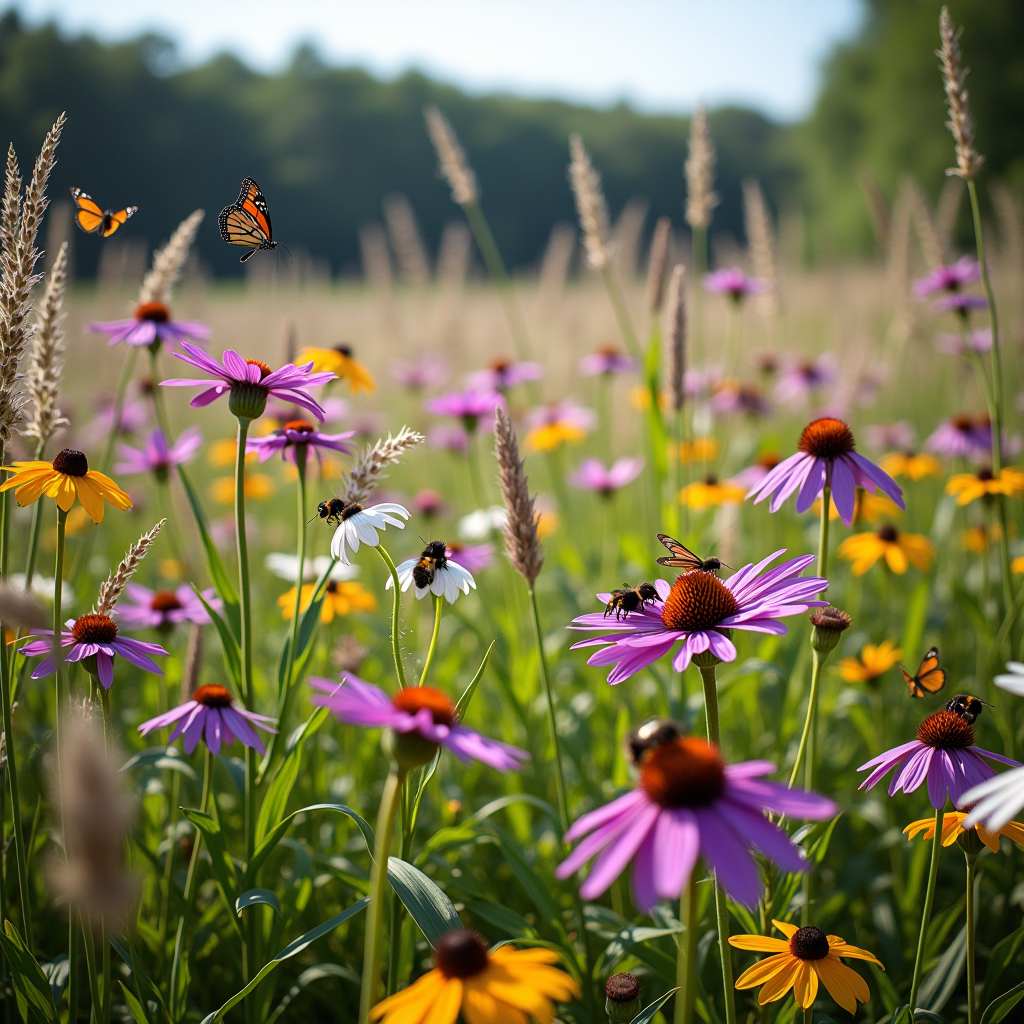
A successfully restored native wildflower meadow demonstrates the vibrant biodiversity that returns when indigenous plant communities are reestablished
Restoration Projects and Methodologies
Successful native plant restoration requires careful planning, appropriate species selection, and long-term commitment. Recent projects across diverse ecosystems have refined restoration methodologies, providing valuable insights for future conservation efforts. These projects demonstrate that restoration success depends on understanding local conditions, selecting appropriate native species, and implementing adaptive management strategies.
One particularly successful approach involves creating detailed site assessments before beginning restoration work. These assessments examine soil conditions, hydrology, existing vegetation, and historical plant communities. By understanding what grew naturally on a site before degradation, restoration ecologists can select appropriate native species that will thrive in existing conditions. This evidence-based approach significantly improves establishment success and long-term sustainability.
Seed collection and propagation represent critical components of restoration projects. Many restoration initiatives now include partnerships with local native plant nurseries and seed banks, ensuring genetic diversity and local adaptation in restored plant communities. Using locally-sourced seeds and plants increases establishment success while maintaining the genetic integrity of regional plant populations. This attention to genetic provenance ensures that restored plant communities can support local wildlife populations that have adapted to specific plant varieties.
Planting strategies vary depending on site conditions and restoration goals. Some projects use direct seeding, broadcasting native seeds across prepared sites and allowing natural selection to determine which species thrive. Others employ container-grown plants, providing young native plants with a competitive advantage during establishment. Many successful projects combine both approaches, using container plants for difficult-to-establish species while direct seeding more aggressive native colonizers.
Supporting Entire Food Webs
The true power of native plant restoration becomes evident when examining its effects on entire food webs. Native plants form the foundation of these complex networks, supporting herbivorous insects that in turn feed countless predators. This bottom-up approach to conservation recognizes that protecting top predators and charismatic megafauna requires maintaining healthy populations of the smaller organisms they depend upon.
Native plants support specialized relationships that have evolved over millennia. Many native insects can only feed on specific native plant species, having developed the biochemical adaptations necessary to process these plants' defensive compounds. Monarch butterflies and milkweed provide the most famous example, but thousands of similar relationships exist throughout North American ecosystems. When native plants disappear, these specialized insects disappear with them, creating cascading effects throughout the food web.
The abundance of insects supported by native plants creates opportunities for insectivorous wildlife. Restored native plant communities show dramatic increases in bird diversity and abundance, particularly during breeding season when protein-rich insects become essential. Amphibians, reptiles, and small mammals also benefit from increased insect populations, while larger predators find more abundant prey in restored habitats.
Beyond insects, native plants provide seeds, nuts, berries, and nectar that support diverse wildlife communities throughout the year. The timing of these food sources aligns with wildlife needs, providing critical nutrition during migration, breeding, and preparation for winter. This temporal matching between plant productivity and wildlife requirements represents another product of co-evolution, demonstrating why native plants prove so much more valuable than non-native alternatives.
Endangered Species Recovery Through Plant Restoration
Native plant restoration has emerged as a critical tool in endangered species recovery efforts. Many threatened and endangered species face extinction not because of direct persecution but because of habitat degradation and the loss of native plant communities they depend upon. Restoring these plant communities creates the foundation necessary for species recovery, providing the resources endangered wildlife need to survive and reproduce.
Several recent success stories illustrate this connection. Grassland bird species, many of which have experienced severe population declines, show remarkable recovery in areas where native prairie plants have been restored. These birds require specific plant structures for nesting and depend on the insects supported by native grasses and wildflowers for feeding their young. Without proper plant communities, even protected grasslands cannot support viable bird populations.
Pollinator conservation provides another compelling example. Native bees, butterflies, and other pollinators face unprecedented challenges from habitat loss and pesticide exposure. Many of these species require specific native plants for survival, having evolved specialized relationships over thousands of years. Restoration projects that reestablish diverse native plant communities create refuges where pollinator populations can recover, supporting both wildlife conservation and agricultural productivity.
Amphibian conservation also benefits significantly from native plant restoration. Many amphibian species require specific vegetation structures around breeding ponds and along migration corridors. Native plants provide appropriate cover, maintain water quality through their root systems, and support the aquatic insects that tadpoles feed upon. Restoration projects that address both aquatic and terrestrial plant communities create the complex habitats amphibians need to complete their life cycles.
Long-Term Monitoring and Adaptive Management
Successful restoration extends far beyond initial planting. Long-term monitoring and adaptive management prove essential for ensuring that restored plant communities develop properly and continue supporting wildlife over time. Recent projects have demonstrated that restoration requires ongoing attention, with management strategies adjusted based on monitoring results and changing conditions.
Monitoring protocols typically track both plant community development and wildlife response. Vegetation surveys document species composition, cover, and diversity, revealing whether native plants are establishing successfully and whether invasive species are returning. Wildlife surveys assess how animals respond to restored habitats, providing crucial feedback on restoration effectiveness. This dual approach ensures that restoration achieves its ultimate goal: creating functional wildlife habitat.
Adaptive management allows restoration practitioners to adjust strategies based on monitoring results. If certain native species fail to establish, managers can investigate causes and modify planting techniques. If invasive species return, management can intensify control efforts before problems become severe. This flexible approach recognizes that restoration involves complex ecological processes that don't always proceed as planned, requiring ongoing attention and adjustment.
Long-term monitoring also reveals important lessons about restoration ecology. Data collected over years and decades helps practitioners understand which techniques work best in different situations, how long restoration takes to achieve various goals, and what factors most influence success. This growing knowledge base improves restoration practice, making future projects more effective and efficient.
The Path Forward: Scaling Up Restoration Efforts
The success of recent native plant restoration projects demonstrates both the potential and the necessity of scaling up these efforts. While individual restoration projects create valuable wildlife habitat, addressing the broader biodiversity crisis requires restoration at landscape scales. This ambitious goal demands increased resources, expanded partnerships, and innovative approaches to restoration implementation.
Engaging private landowners represents a critical component of landscape-scale restoration. Much of North America's land remains in private ownership, meaning that conservation success depends on landowner participation. Programs that provide technical assistance, financial incentives, and native plants to private landowners can dramatically expand restoration efforts. When individual landowners restore native plants on their properties, these scattered efforts combine to create networks of habitat that support wildlife movement and population connectivity.
Urban and suburban areas also offer significant restoration opportunities. Residential landscapes, parks, and other green spaces can support native plants and wildlife when managed appropriately. Encouraging homeowners to replace non-native ornamentals with native plants creates stepping stones of habitat through developed areas, supporting wildlife populations and connecting larger natural areas. This approach recognizes that conservation cannot succeed by focusing only on protected natural areas while ignoring the vast acreage of developed land.
The connection between native plant restoration and wildlife protection offers hope for conservation's future. By focusing on the foundation of ecosystems—the plants that support entire food webs—restoration efforts create lasting benefits for countless species. As we face unprecedented challenges from climate change, habitat loss, and species extinction, native plant restoration provides a practical, effective tool for protecting biodiversity and supporting endangered species recovery. The path forward requires commitment, resources, and collaboration, but the success of recent projects demonstrates that restoration works. When we restore native plants, we restore the intricate web of life they support, creating resilient ecosystems where wildlife can thrive for generations to come.
"Every native plant we restore represents thousands of connections in the web of life. When we bring back indigenous flora, we're not just planting—we're rebuilding entire ecosystems and giving wildlife the foundation they need to survive and flourish."
— Conservation Ecologist, Native Plant Restoration Initiative